

Simon Wachsmuth
-
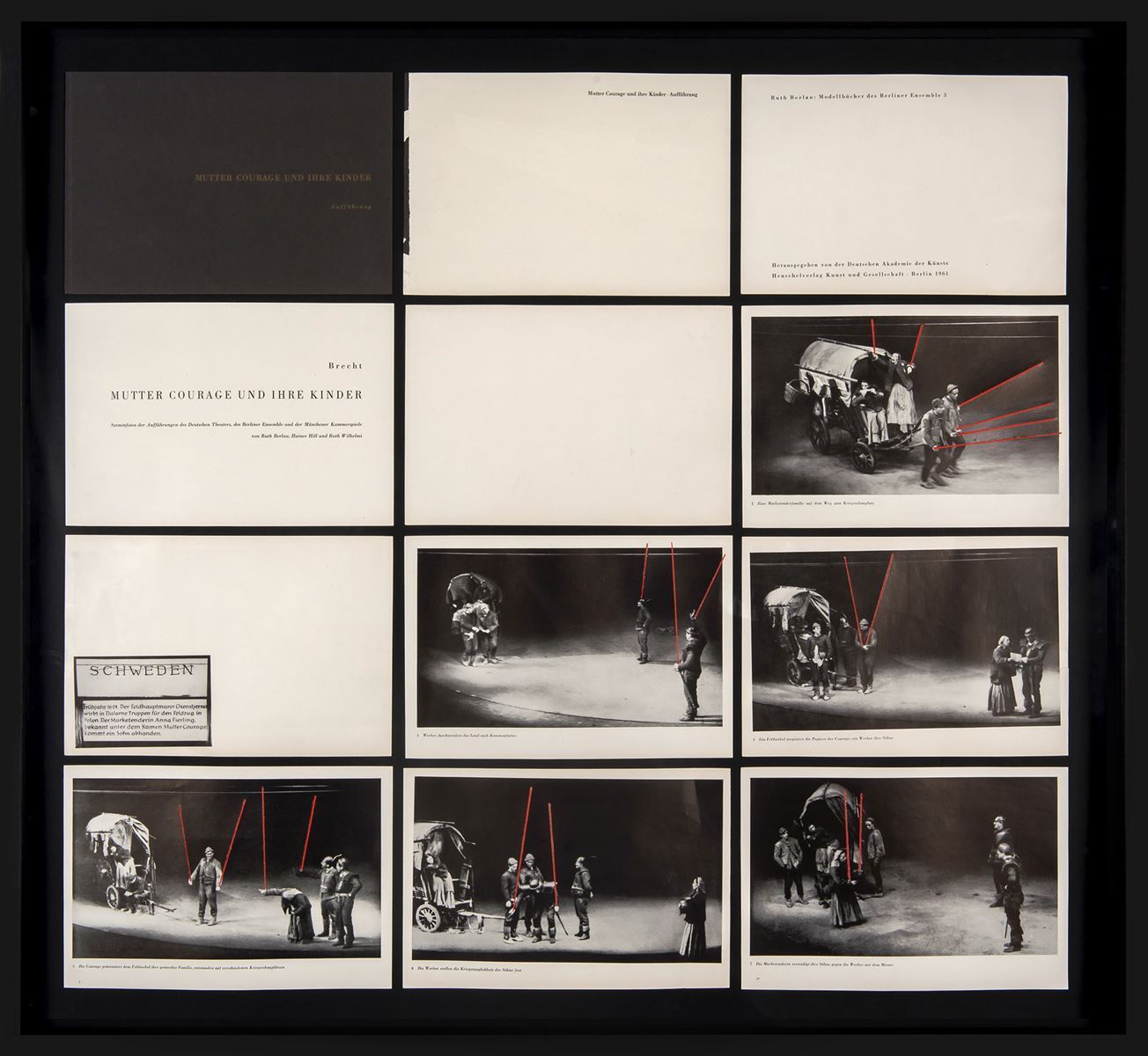
"Genius Malignus (Evil Demon)", Mixed media on paper, 74 x 81 x 5 cm, 2018 -
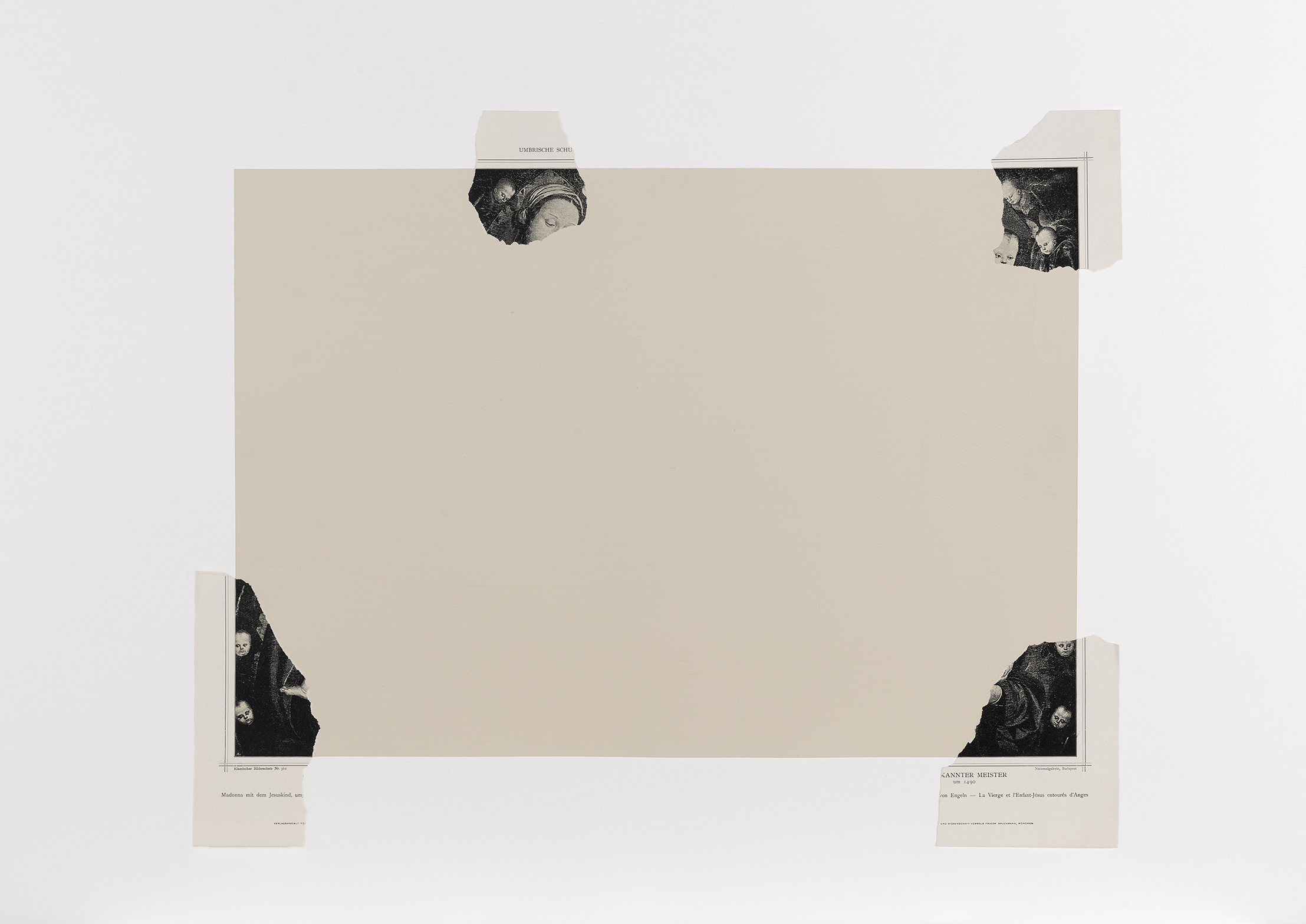
"Umbrische Schule", Paper, collage, 70,8 x 84,3 cm , 2020 -
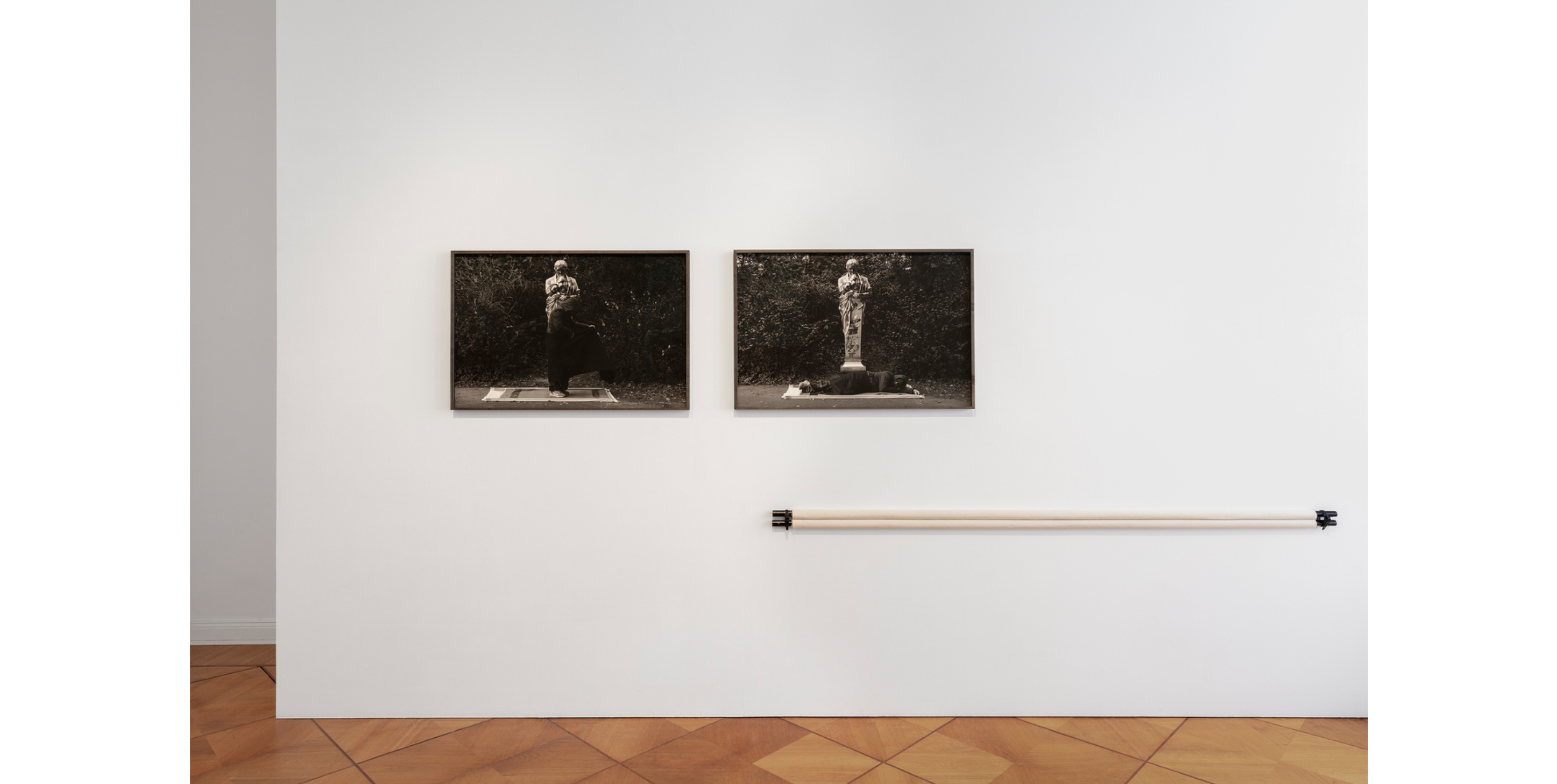
"I work, I rob day and night", Archival pigment print, rolled up canvas, 60 x 90 cm each photo, 2022 -
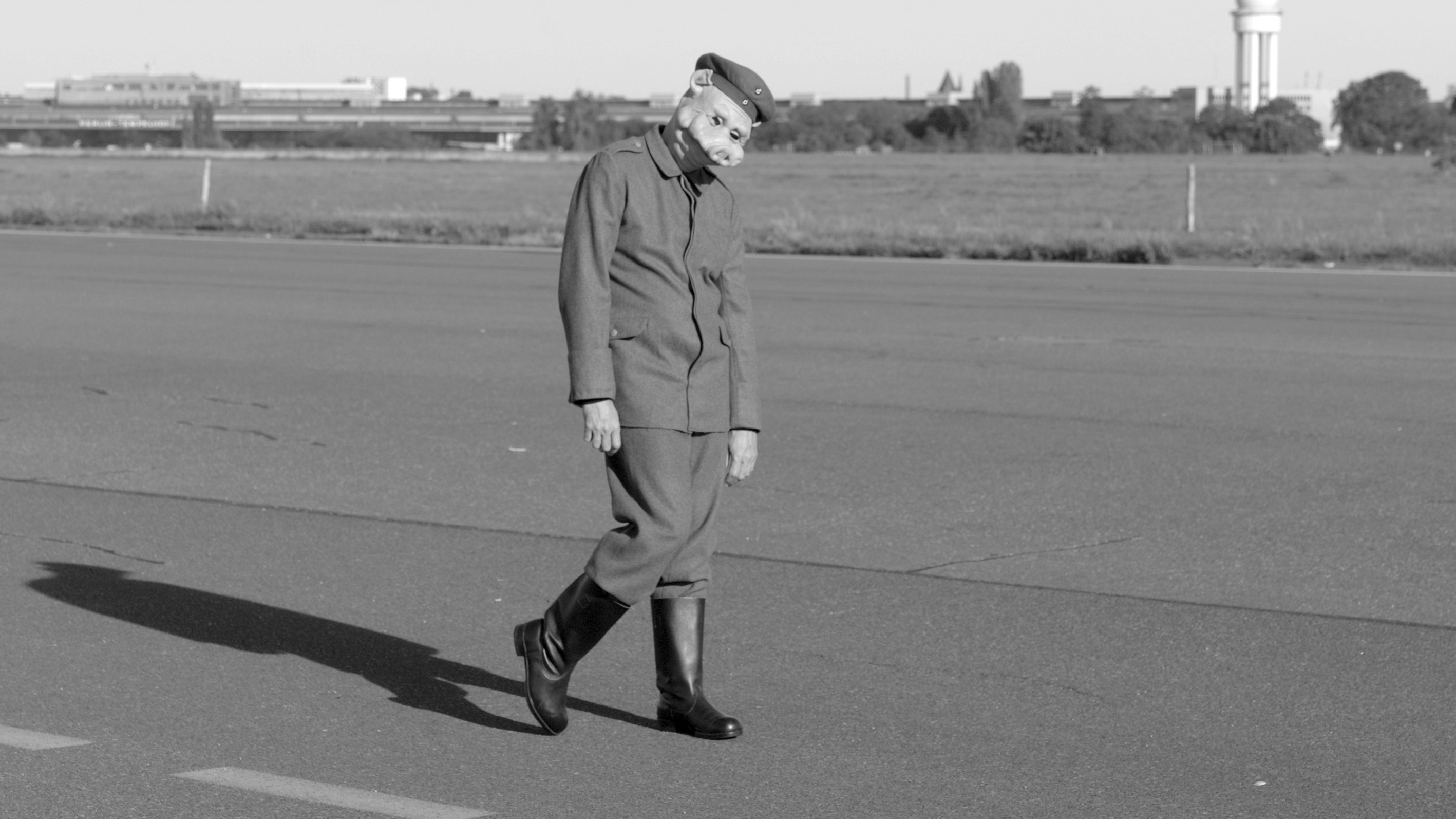
"From Heaven High", HD video, b/w, 11', 2022 -

"Vier Himmel", Collage, paper, acrylic paint, 29.5 x 28.5 cm (framed), 2024 -

"Drei Hände", Collage, paper, acrylic paint, 28 x 22 cm (framed), 2024 -

"Steles", Installation: Metal posts and paper rubbings , Rubbings on paper: 40 x 40 cm (each); Metal objects: 210 cm (h), base cross: 59 x 50 cm (each), 2025 -

"Theatrum Belli - Theatrum Paci", Box and walltext, Variable dimensions, 2025
Simon Wachsmuth’s (b. 1964) work explores themes of history, myth, and forms of dramatisation. His practice encompasses film, installation, sound, text, and performance. He lives and works in Berlin and Vienna.
Through a range of artistic forms, Simon Wachsmuth examines how historical narratives come into being, how representations of the past are culturally and politically shaped, and how they circulate through different discursive frameworks. His work focuses on the ways motifs migrate across time and space: how they detach from their original contexts, reappear in new visual or political constellations, and contribute to the formation of collective memory. Monuments and documents appear throughout his oeuvre not as static historical markers but as active carriers of memory whose meanings shift as they are recontextualised. In this sense, archaeology recurs in his practice not only as a motif but also as a methodological approach. Wachsmuth’s installations form subtly woven structures that assemble dispersed images, references, and narratives – networks that reveal both the gaps and the dense intersections where histories coalesce.
Over time, Wachsmuth has developed a practice attentive to the blind spots and unexpected afterlives within dominant historical accounts. This perspective became central to his contribution to documenta 12 in Kassel (2007), for which he developed the large-scale installation Where We Were Then, Where We Are Now? By juxtaposing reliefs from Persepolis with motifs such as the Alexander Mosaic from Pompeii, the work explored the interweaving of ancient imagery with contemporary political and historical interpretations.
Questions surrounding the transmission and retelling of history, as well as a critical reflection on its instrumentalisation, also informed Simon Wachsmuth’s project for the Istanbul Biennial (2009). This work deepened his engagement with the political dimensions of archaeology and later resonated with his residency at the Tarabya Cultural Academy in Istanbul (2021/22). These questions also shaped his contributions to the Busan Biennale (2012) and the exhibition project Suzhou Documentsin China (2016), where he explored how the meanings of historical materials shift when they are situated in different cultural and institutional contexts.
The exhibition Atlas. How to Carry the World on One’s Back? at the Museo Reina Sofía in Madrid (2010–2011), curated by Georges Didi-Huberman, situated Simon Wachsmuth’s work within a discourse that understands images as historical agents. The exhibition highlighted how visual juxtapositions and archival constellations can unsettle linear narratives and reveal the processes through which meaning is negotiated.
Simon Wachsmuth’s participation in Steirischer Herbst (Kunsthaus Graz, 2016), curated by Zasha Colah, introduced his video installation Qing, a work that weaves together the history of his family in Vienna with trajectories reaching from Shanghai back to Vienna. Engaging performatively with the migration of gestures and objects, the piece further explored how personal archives intersect with broader structures of collective historicity.
Simon Wachsmuth’s contribution to the 13th Berlin Biennale (2025), curated by Zasha Colah, included the film From Heaven High, a satirical reworking of the Dadaist “Prussian Archangel” by John Heartfield and Rudolf Schlichter. The work addressed the shifting meanings of symbolically charged imagery in contemporary debates on freedom of expression, connecting these historical references with questions of authority, resistance, and individual responsibility.
A significant strand of Simon Wachsmuth’s recent work is his long-term investigation into the themes of war and authoritarianism. This has resulted in a series of large-scale installations in the form of carriages and stages – quasi-theatrical objects that examine how early modern conflicts such as the Thirty Years’ War shaped modern diplomacy and Europe’s political architecture, and how these legacies continue to inform contemporary geopolitical imagination. The project began with the work for which he received the Marta Prize of the Wemhöner Foundation and has since evolved into a complex, multi-part research cycle. His solo exhibition Evil Spirits / Böse Geister at the Lentos Museum in Linz (2025) presented a new group of installations emerging from this inquiry, bringing together historical research with contemporary forms of ideological and cultural projection.
> CV
> EXHIBITIONS
- Pondering Provenance
- Now on Display
- Instances of Erasure
- Ivy
- Seven Deadly Sins
- That Pause of Space
- Recurrence 2
- Recurrence
- Dramatization
- Some Descriptive Acts